DX Associate Programme
The response to our open call was a reminder of the talent running through Lewisham and its borders. We were overwhelmed and we want to thank everyone who took the time to apply.
Over the next nine months, these three practitioners will be right here with us—developing their crafts within a space of support and shared learning. This programme is about more than “professional development”; it’s about shifting the needle for Global Majority and working-class creatives in our borough. Deptford X aim to ensure our local arts scene is led by the people who make it what it is.
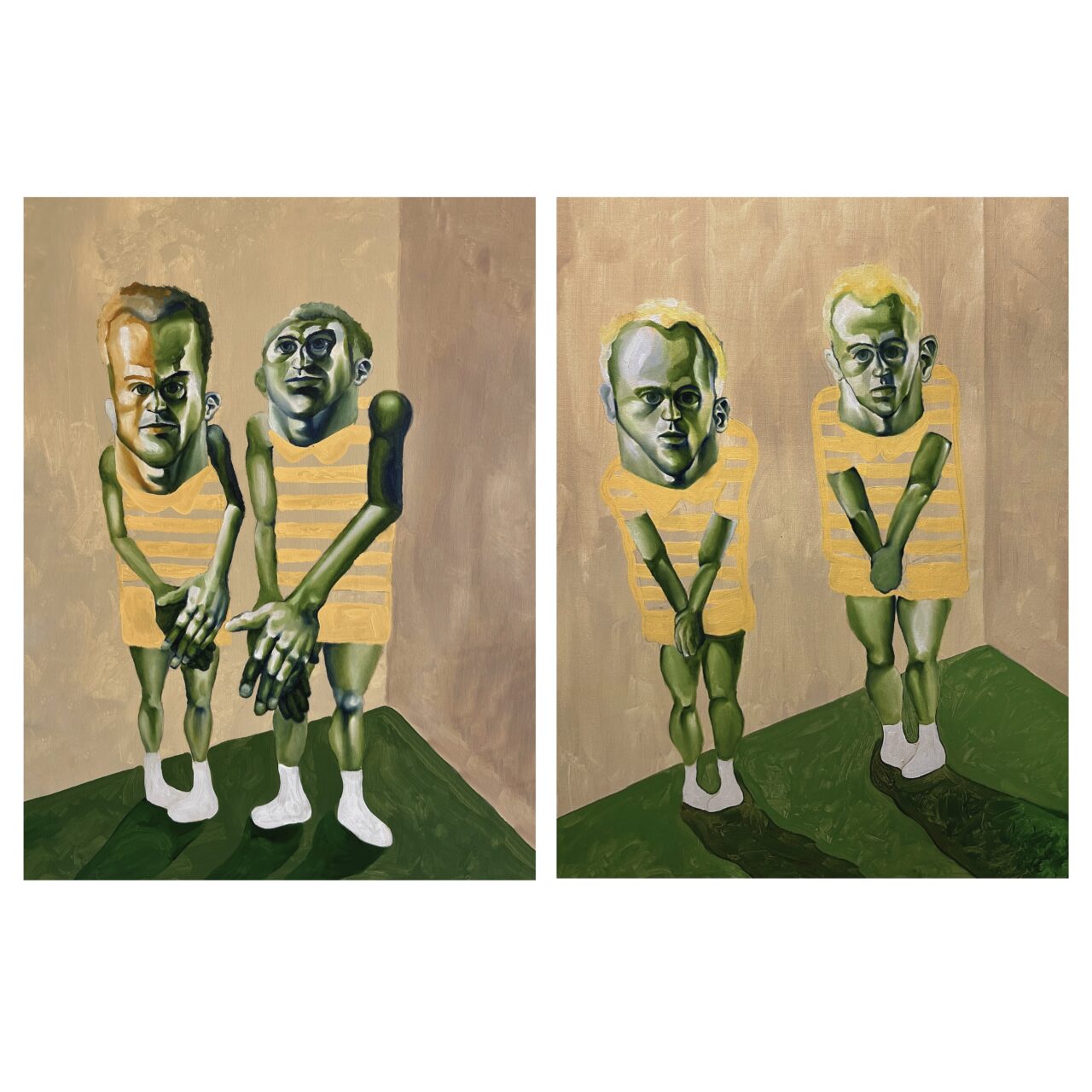
Sam Wootton (he/him) is a South-East London–based artist whose work centres on self-construction. Rejecting the figurative myth of paint as purity or truth, he explores built selves and gender worn in gesture — defensive men and their stoic fathers, flags as flimsy shields, plywood crosses for scarecrow causes. Painted dolls as opposed to bared souls.
Sam has completed commissions for The Tate, Gucci, Salomon, Axel Arigato and Sandro, and exhibited during London and Paris Fashion Weeks. His work has been shown at Wolverhampton Art Gallery, with recent exhibitions
including Collectivist (Isaac Andrews) and a duo show at Brighton’s Koop Projects. His first solo show was held at Forevergood, sponsored by Brixton Brewery.
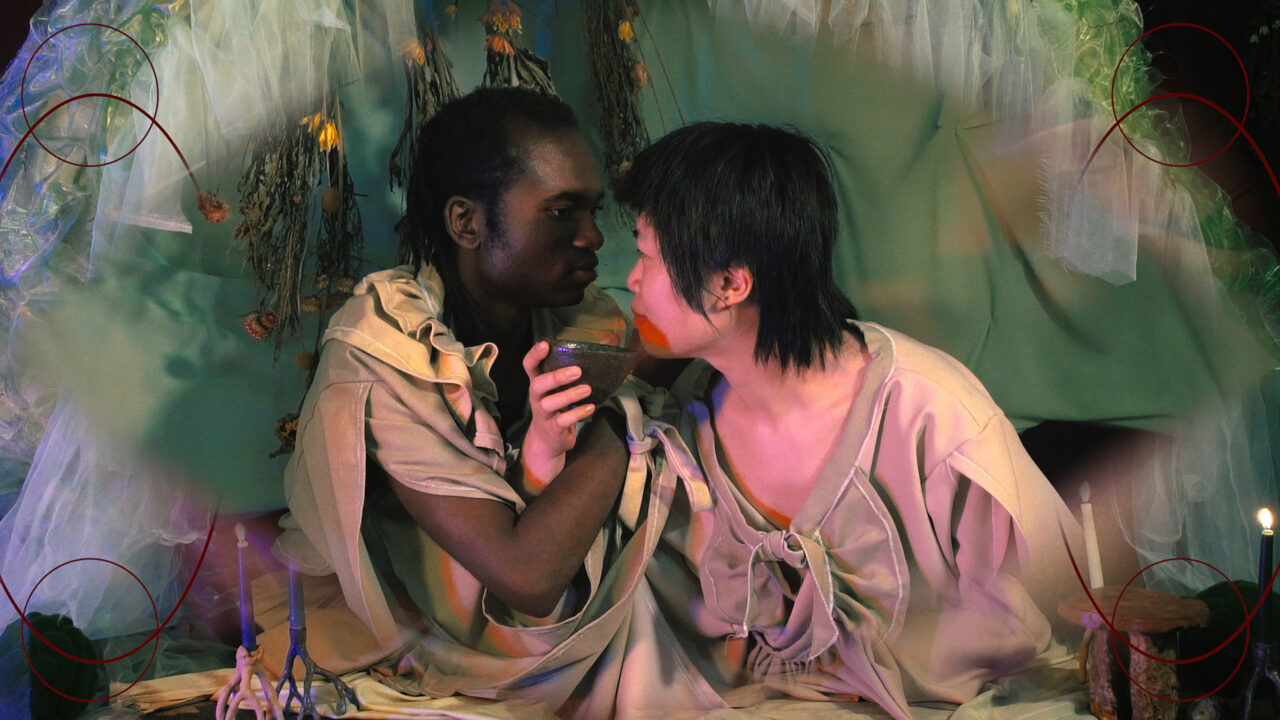
april forrest lin 林森 (they/them), a London-based artist, curator, and film programmer. They traverse artist moving image, writing, installation, and performance, their interdisciplinary practice invoking thematic portals of multispecies epistemologies, the archival and the anti-archival, trans embodiment, and the vernacular of the diasporic. With a background in sociology, they bridge research~speculation, the sciences~the arts, and the fictional~the factual with a commitment to a collective remembering of forgotten pasts, a critical examination of normalised presents, and a building of futurities as imagined from the periphery.
Their work is in the collection of Malmö Konstmuseum and has been screened and exhibited at arts institutions, festivals, galleries, universities including the Museum of the Moving Image New York, the Barbican Centre, HAU Berlin, Manchester Art Gallery, Ikon Gallery and Piehouse Co-op.
Elizabeth Oniri’s (she/her) practice moves between textile sculpture, painting, sound, and digital design, using tactile and experimental processes to explore form, memory, and embodied experience. Techniques such as trapunto, upholstery, padding, and layering allow material to operate simultaneously as structure, surface, and narrative. For Elizabeth, material is not illustrative but generative; its physical properties actively determine the direction and resolution of each work.
Working with textiles, resin, wood, paint, and found or constructed objects, Elizabeth’s making shifts between focused precision and free, gestural movement, creating a tension between control and spontaneity. While grounded in personal experience, her work extends toward cultural heritage and collective memory, drawing on abstraction, nature, movement, and ritual to consider how the body remembers through touch, repetition, and acts of making